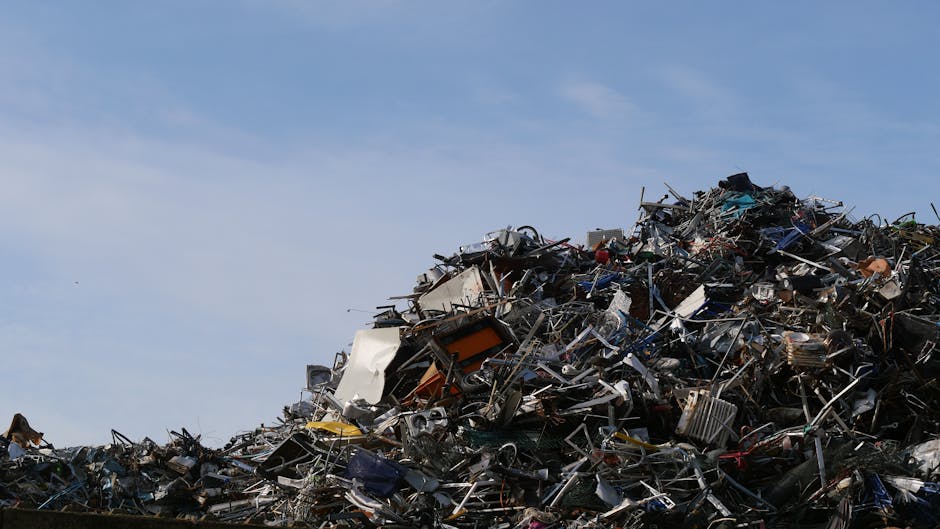
Broxbourne Borough Council Fines for Illegal Rubbish Dumping: What Residents and Businesses Need to Know
If you have ever stared at a pile of bags, broken furniture, or builder's rubble and thought, "Can I just leave this here for a bit?", you are not alone. But with Broxbourne Borough Council fines for illegal rubbish dumping, that quick decision can become an expensive problem very fast. Fly-tipping is not just an eyesore; it creates real costs for households, landlords, businesses, and the wider community. In this guide, we explain what the council fines can mean, how enforcement usually works, what counts as illegal dumping, and the safer ways to get rid of waste without landing yourself in trouble.
We will keep it plain-English, practical, and local. You will also find a checklist, a comparison table, and a realistic example so you can make sensible choices before waste becomes someone else's headache. Let's face it, nobody wants a knock on the door over a sofa left by the roadside.
Why Broxbourne Borough Council fines for illegal rubbish dumping Matters
Illegal rubbish dumping, often called fly-tipping, is more than a messy shortcut. It can block pavements, attract vermin, create fire risks, and make streets feel neglected. In practice, that means councils spend time and money clearing waste that should never have been left there in the first place. The fine exists to discourage exactly that behaviour.
For most people, the issue starts with something small. A mattress left beside a communal bin. A couple of bin bags "temporarily" placed near a hedge. A van-load of old plasterboard dumped after a renovation. Tiny decisions can snowball, and once waste is abandoned in the wrong place, it can be treated seriously. Broxbourne Borough Council fines for illegal rubbish dumping are designed to stop this casual attitude before it spreads.
There is also a fairness point here. Many residents and businesses take the time to arrange lawful disposal, book clearances, separate recyclables, or use licensed waste services. When someone dumps waste illegally, everyone else ends up paying through missed time, local clean-up costs, and a worse-looking neighbourhood. That is the bit people sometimes forget.
Expert summary: If waste is left where it should not be, or passed to the wrong person, you may be exposed to enforcement action. The safest approach is simple: keep records, use proper disposal routes, and never assume a pile is "too small to matter."
How Broxbourne Borough Council fines for illegal rubbish dumping Works
In broad terms, the council can issue penalties when waste is found to have been dumped unlawfully, or when there is evidence linking a person or business to the offence. The exact route depends on the circumstances, what was dumped, where it was left, and whether there is enough information to identify the responsible party.
That might sound abstract, but the process usually follows a fairly predictable pattern:
- Waste is reported or discovered.
- The council investigates the location, items, packaging, labels, or other clues.
- Officers consider whether the waste appears to have been fly-tipped or otherwise unlawfully deposited.
- Where appropriate, enforcement action is taken against the person believed to be responsible.
Sometimes the evidence is obvious. A delivery label, invoice, or name-and-address document can connect waste to a household or business. Other times, the matter is less clear and the council may need to look at the wider circumstances. It is not always as simple as "there's rubbish, so there's a fine." But if there is a reasonable trail, that trail matters.
One common mistake is assuming that paying someone cash to take waste away removes your responsibility. It doesn't. If the waste is fly-tipped by an unlicensed person, the original owner may still face problems if they failed to check who was taking it. That is a painful lesson, and sadly it happens more often than people think.
In everyday terms, the council is looking for two things: where the waste came from, and whether you took reasonable steps to dispose of it properly. The more careless the disposal, the more exposed you may be. Simple as that.
Key Benefits and Practical Advantages
It may feel odd to talk about "benefits" in a fines article, but there are real practical advantages to understanding how enforcement works. Once you know what the council is likely to view as risky, you can avoid costly mistakes and plan waste disposal properly.
- You reduce legal and financial risk. A single careless disposal decision can become much more expensive than booking the right service in the first place.
- You protect your reputation. This matters especially for landlords, tradespeople, and small businesses. Fly-tipping allegations can stick.
- You keep evidence on your side. Receipts, photos, and job notes can show you acted responsibly if questions arise later.
- You support cleaner local streets. That means less stress for neighbours, tenants, and passers-by.
- You make better disposal decisions. Once you understand the rules, it becomes much easier to choose the right route for household, garden, office, or builders' waste.
There is also a quiet benefit that people appreciate after the fact: peace of mind. You know where the waste went, who handled it, and that it was dealt with properly. No awkward surprises. No "where did that sofa end up?" moment three weeks later.
If your waste is bulky, mixed, or awkward to move, it may make more sense to arrange a lawful collection rather than trying to improvise. Services such as waste removal and house clearance are often a better fit than leaving the problem to chance.
Who This Is For and When It Makes Sense
This topic matters to a wider group of people than you might first expect. It is not just for people who have been caught dumping rubbish. It is for anyone who handles waste and wants to stay on the right side of local enforcement.
You may need this if you are:
- a homeowner clearing out a garage, loft, shed, or spare room;
- a landlord dealing with tenant left-behinds;
- a tradesperson or builder producing rubble, timber, or packaging;
- a shop owner or office manager clearing stock or equipment;
- someone hiring a man-and-van style collector;
- a family sorting out bulky furniture after a move or bereavement.
It also makes sense if you have a mess that is too much for the weekly bin but not quite enough to justify a skip. That middle ground is where people often get tempted into shortcuts. A few items start leaning against the wall, then a week passes, then another. Before long, it looks suspicious. Human nature, really.
For businesses, the risk is sharper. Commercial waste must be handled carefully, especially where there are multiple staff members, contractors, or tenants involved. If you run a workplace, using a proper service such as business waste removal can save a lot of hassle.
Step-by-Step Guidance
If you want to avoid Broxbourne Borough Council fines for illegal rubbish dumping, the safest move is to treat every clearance as a small compliance exercise. That sounds grand, but it is mostly common sense done properly.
1. Identify exactly what you are throwing away
Sort waste into clear groups: household items, furniture, garden waste, builder's rubble, electrical items, and general rubbish. Mixed waste is where mistakes creep in. A mattress is one thing; a mattress stuffed with dirty textiles and mixed with broken shelving is another.
2. Decide whether it needs a specialist service
Some waste is easy to handle, but bulky or heavy items need more care. For example, old sofas, wardrobes, office chairs, or shed contents usually make more sense as a collected clearance. Furniture and large household items can often be handled through furniture disposal or furniture clearance.
3. Check who is collecting it
If you are using a third party, ask sensible questions. Who is taking the waste? How will it be handled? Can they show they operate responsibly? If they dodge basic questions, that is your cue to walk away. No drama needed.
4. Keep proof
Save invoices, messages, photos of the waste before collection, and notes about who took it. A simple record can be very helpful later. It does not need to be fancy. A folder on your phone is better than nothing, and honestly, most people forget this step.
5. Place waste out only where permitted
Do not put items on public land, by the roadside, or near communal bins unless you are specifically allowed to do so and have arranged the collection accordingly. "I thought it was okay" is not a great defence.
6. Use proper local alternatives
Depending on the type of waste, you might need a specialist service for gardens, lofts, garages, offices, or builders' rubble. Relevant options include garden clearance, garage clearance, loft clearance, office clearance, and builders waste clearance.
Expert Tips for Better Results
After enough real-world clearances, a few patterns become obvious. The people who avoid trouble are rarely the ones with perfect planning. They are the ones who keep things simple and documented.
- Always check before you hand waste over. If the collector cannot explain where the waste goes, that is a problem.
- Separate recyclables where practical. This helps with cleaner disposal and fits with a more responsible waste process.
- Take photos before collection. A quick phone photo takes seconds and can be useful if there is later a dispute about what was removed.
- Do not rely on verbal promises alone. If someone says they are licensed or insured, make sure the paperwork matches the claim.
- For bulky domestic jobs, plan access. Clear hallways, protect floors, and make sure items can be removed without leaving them in a communal area overnight.
- Be careful with business waste. Mixed commercial rubbish can contain paperwork, packaging, and equipment that should not be casually abandoned.
If you need an all-in-one approach, a properly managed home clearance can be a practical option for messy moves, probate clearances, or big declutters. The key is proper handling, not just speed.
One small but useful tip: if waste is sitting by the door while you wait for a pickup, make sure it is still on private property and protected from being mistaken for fly-tipped material. That tiny detail can matter more than people realise.
Common Mistakes to Avoid
Most problems around illegal dumping come from a handful of recurring mistakes. None of them are clever, and most are avoidable if you slow down for five minutes.
- Leaving waste in a public place "just for now". This is one of the fastest ways to invite enforcement action.
- Using an unverified collector. Cheap is not cheap if the waste ends up dumped and traced back to you.
- Assuming a neighbour's bin is fair game. It usually isn't.
- Mixing different waste types together. That makes lawful disposal harder and more expensive.
- Failing to keep proof of disposal. If there is a dispute later, memory alone is weak evidence.
- Overfilling bins or placing waste beside them. It looks untidy at best and unlawful at worst.
- Ignoring business obligations. Commercial waste needs a proper paper trail, even if it is just a small office clear-out.
There is also a subtler mistake: thinking the council only cares about huge fly-tips in lay-bys or country lanes. Not true. Small-scale dumping, repeated poor behaviour, and badly managed waste can all create problems. That is often where enforcement starts.
Tools, Resources and Recommendations
You do not need a complicated toolkit to stay compliant. A few basic habits go a long way.
| Need | Useful approach | Why it helps |
|---|---|---|
| Proof of disposal | Keep invoices, messages, and photos | Shows you acted responsibly |
| Bulky household waste | Use a planned clearance service | Reduces the temptation to dump items illegally |
| Mixed rubbish | Sort items before collection | Makes disposal easier and cleaner |
| Business rubbish | Use a proper commercial waste route | Helps with compliance and record-keeping |
| Garden or garage clutter | Book a specialist collection | Useful for awkward, heavy, or messy items |
On the service side, it is worth looking at related options if your clear-out is more than a couple of bin bags. For example, garage clearance works well for long-forgotten household clutter, while flat clearance can be helpful where stair access or shared entrances make DIY disposal awkward.
For more detail about how a provider handles waste responsibly, check recycling and sustainability. If you are comparing prices, the page on pricing and quotes is a sensible starting point. And if you are unsure what happens on the day, the section on health and safety can help set expectations.
Law, Compliance, Standards, or Best Practice
When people talk about fines for illegal rubbish dumping, they are usually referring to local enforcement under the wider UK framework for waste disposal and anti-fly-tipping action. The exact penalty and process can vary depending on the offence and the evidence available. So, to be fair, it is best not to guess at a fixed figure or assume one council approach applies in every case.
The safest compliance principles are straightforward:
- Do not abandon waste on land you do not have permission to use.
- Use responsible, traceable disposal routes.
- Check who is taking your waste and keep a record.
- Separate business waste from household waste where required.
- Keep clear evidence of collection, transfer, or removal.
For businesses, the standard of care is usually higher because you are expected to manage waste systematically. For homeowners, the biggest risk is casual disposal: leaving things by a wall, next to a hedge, or on a verge because it feels temporary. That temporary bit is exactly where problems begin.
Best practice is boring, but effective. Arrange the right service, know what it will remove, understand where it is going, and keep proof. That simple chain is often enough to keep you well away from trouble.
Options, Methods, or Comparison Table
If you are weighing up how to deal with unwanted rubbish, the best method depends on volume, item type, access, and urgency. Here is a straightforward comparison.
| Option | Best for | Pros | Watch-outs |
|---|---|---|---|
| DIY bin disposal | Small, ordinary household waste | Low effort if the amount is tiny | Easy to overfill bins or breach collection rules |
| Self-loading van trip | Moderate waste where you can transport items safely | Useful for control and timing | Needs time, fuel, and a lawful destination |
| Skip hire | Projects with a steady stream of waste | Handy for ongoing renovation waste | Requires space and the right placement permissions |
| Professional clearance | Bulky, mixed, awkward, or urgent waste | Convenient and usually quicker | Choose carefully and keep records |
For many households, a clearance service is the easiest route because it removes the uncertainty. If you are clearing furniture, loft clutter, or a full property, the relevant service page can guide you toward the right approach, whether that is house clearance, loft clearance, or furniture disposal.
Case Study or Real-World Example
Imagine a small family clearing out a shed after a winter of putting things off. There are broken plant pots, an old barbecue, half-dry bags of soil, a cracked shelving unit, and a couple of rusted tools. Nothing dramatic. Just the sort of job that quietly grows.
They first think about leaving it all beside the bins for council collection. But the pile is too big, and a neighbour has already had a warning for leaving furniture in the wrong place. So they pause, sort the waste, and arrange a proper collection instead. The metal goes with metal, the garden waste is separated, and the bulky bits are taken away in one visit.
It is not glamorous. No one takes a proud photo of a cleared-up shed at 8:15 on a Saturday morning. But that decision avoids a potential complaint, keeps the path clear, and stops the family from risking an enforcement notice over something entirely avoidable. Truth be told, that is usually how good waste decisions look: a bit dull, a bit organised, and very effective.
A similar approach helps with end-of-tenancy clearances, office refurbishments, and post-build clean-ups. It is rarely about finding the most dramatic solution. It is about choosing the one that keeps you compliant and sane.
Practical Checklist
Use this quick checklist before you leave any rubbish out or hand it to someone else.
- Have I identified exactly what the waste is?
- Have I checked whether it needs a specialist collection?
- Am I sure the person collecting it is legitimate and responsible?
- Have I kept a record, photo, or receipt?
- Is the waste staying on private property until collection?
- Have I separated bulky items, recyclables, and special waste where possible?
- Have I avoided using bins, verges, or shared areas improperly?
- If this is business waste, do I have a proper paper trail?
- Do I know what will happen after collection?
- Would I be comfortable explaining this decision if someone asked tomorrow?
If you can tick most of those without hesitation, you are probably on safe ground. If not, slow down a bit. Better a five-minute delay than a fine.
For household clear-outs that need a more structured approach, you may also want to review about us to understand the service ethos, or contact us if you need help planning a suitable collection. If you value trust and clear processes, the pages on insurance and safety and terms and conditions are worth a look too.
Conclusion
Broxbourne Borough Council fines for illegal rubbish dumping are there for a reason: to stop waste from being left in the wrong place and to encourage responsible disposal. The good news is that most problems are preventable. If you sort your waste properly, use the right collection route, keep a paper trail, and avoid shortcuts, you are already ahead of the game.
For households, that might mean a one-off clearance for a loft, garage, or old sofa. For businesses, it may mean a more regular waste plan and clearer internal responsibility. Either way, the principle is the same: if it feels dubious, it probably is. Choose the cleaner path. It is almost always cheaper in the end.
Get a free quote today and see how much you can save.
Frequently Asked Questions
What counts as illegal rubbish dumping in Broxbourne?
Illegal rubbish dumping usually means leaving waste somewhere it should not be, such as on public land, by the roadside, or on someone else's property without permission. It can include anything from bin bags and furniture to rubble and garden waste.
Can I be fined if someone else dumps waste from my property?
Yes, potentially. If you pass waste to an unverified person and it is later dumped illegally, you may still have questions to answer. Keeping records and using responsible collectors helps reduce that risk.
Is putting bags next to a bin classed as fly-tipping?
It can be, especially if the bags are not meant for that collection or they are left in a way that creates a mess or obstruction. The safest rule is simple: only place waste where it is allowed.
How do I avoid Broxbourne Borough Council fines for illegal rubbish dumping?
Use legal disposal routes, keep evidence of collection, check who is removing your waste, and never leave items on public land or beside bins unless you are specifically permitted to do so.
Do I need proof when I pay someone to take rubbish away?
Yes, absolutely. A receipt, message, or invoice can be very useful if the waste is later traced back to you. No proof means more risk, and that is a bad trade.
What should I do if I find dumped rubbish near my home?
Report it through the appropriate local route and avoid moving it unless it is safe and lawful to do so. Do not assume it will just disappear on its own; it usually does not.
Is a council fine the same as a court penalty?
No, not necessarily. Some cases may involve fixed penalties or enforcement notices, while more serious matters can escalate further. The outcome depends on the circumstances and evidence.
Can businesses be fined for illegal rubbish dumping too?
Yes. Businesses are expected to manage waste properly and keep records. Commercial waste should never be treated casually, even if it seems like a small amount.
What is the safest way to get rid of bulky household items?
The safest route is usually a proper clearance service or another lawful disposal option that matches the item type. This is especially useful for furniture, loft contents, garage clutter, or mixed household waste.
Does recycling help reduce the risk of fines?
It can. Recycling is not a shield against fines, but it does encourage better waste habits and more organised disposal. A responsible approach usually starts with separating what can be reused or recycled.
What if I am not sure whether my waste is commercial or household waste?
If the waste came from a business activity, even partly, treat it carefully and keep records. When in doubt, assume the stricter standard applies until you have checked properly.
Who should I contact if I need a proper clearance instead of dumping waste?
Use a reputable local clearance provider and ask clear questions about what they remove, how it is handled, and what proof you will receive. If you need a starting point, a page like pricing and quotes can help you understand your options before booking.
Sometimes the safest decision is the least exciting one. And in waste disposal, that is usually the smart move.